
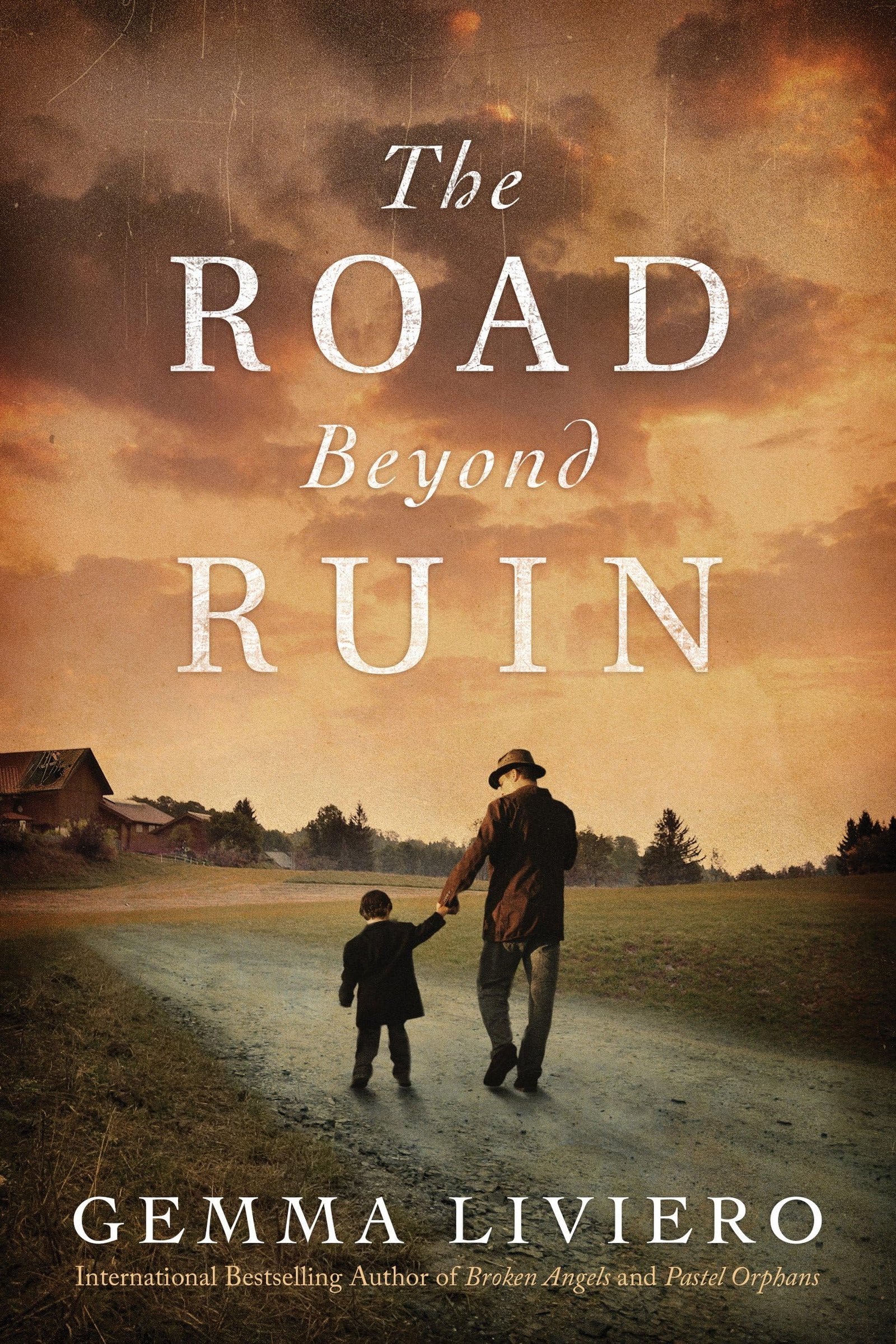
The Road Beyond Ruin Gemma Liviero
The Story
August 1945
Italian prisoner of war Stefano heads home across what’s left of war-torn Germany. As he walks, he comes across a young boy beside the body of his dead mother. Stefano finds himself unable to leave the boy to whatever his unknown fate will be, so takes him along, with the intention that he’ll find relatives along the way.
The pair take refuge, due to exhaustion, in a seemingly abandoned house, but Stefano wakes to find the owner, Erich, a former German soldier, has arrived home. Cautious and wary, Stefano is on his guard, but the German invites him to stay until they can find safe passage home.
Warily, Stefano agrees and admits to himself he’s curious about the German, his reclusive neighbour Rosalind and her damaged husband Georg.
Then there’s Monique, a girl Stefano sees in a photograph who went missing during the war and hasn’t been seen since.
But when Stefano finds letters written by Monique from before she went missing, it seems there’s a depth of hidden secrets beneath the surface.
Secrets that may prevent Stefano and the boy from ever getting home.
My Thoughts
When we think of 1945, we often see the images of victory parades and those iconic photographs taken all across the country as we celebrated VE Day.
And this is a theme that continues throughout film and TV. The end of the war is synonymous with relief, celebration and everyone finally getting a little hope for the future.
But this book flips this view on its head, giving us a 1945 we often forget – the mass confusion and displacement across all of Europe as people tried to get home and pick up what was left of their lives. Amongst the rubble of the cites, often without money, food or shelter, people struggled to come to terms with the last six years of war.
The main character is Stefano, one such displaced person, and it quickly becomes clear he’s suffered during the war.
“Stefano is thin, worn, gaunt, haggard, all the words that his mother would have used to describe his condition.”
This is made all the more stark when the narrative lets us glimpse Stefano before the war at home with his family.
Suspicion and caution are everywhere. People conceal who they are to protect themselves and their families. Neighbours are suspicious of neighbours, and no one really knows where anyone’s loyalty lies.
It’s a time of impossible choices, and the roads, railways and towns of Germany are smashed and broken. People walk on foot to get back to different countries – France, Italy, Poland – all on foot.
The narrative is multiple viewpoint and shifts in time, which I love. All characters are richly flawed and self-serving in some way as they struggle with the changes all around them.
The regaining of lost freedoms and the trauma of war supposedly behind them but for many it doesn’t feel over and the author shows us that for these characters, in many ways, the fighting’s far from over.
The narrative is eye-opening to the continued suffering at the end of the war and skilfully shows the deep routed sense of anger and betrayal from characters on all sides.
As the plot moves from Stefano’s point of view to Rosalind’s and Erich’s we see that each has secrets, trauma and their own selfish nature to deal with as they try to move on from a past that still grips them in different ways and affects their interactions with each other.
It’s a great story with all the elements I enjoy – secrets, betrayal, family disputes, mystery, fantastically flawed characters, multiple view-points and time shifts.
Characterisation –
Each character has their own agenda and serves their own purpose to a certain extent, and it’s this that makes these characters real, and rounded. Excellently flawed individuals.
Point of View –
3rd person multiple perspective, with enough switches to keep it interesting but not too much that it’s confusing and difficult to read.
Plot –
Excellently complicated plot with multiple timelines, and strings that weave and entwine. Well plotted and narrated.
Research –
Well researched. Multiple time periods in different locations across Europe would have meant a lot of meticulous research to get the facts correct. This is clearly an author who goes the extra mile for a story.
Overall –
This is an entertaining and well -researched book that has some stark realities that’ll hit you and make you see 1945 in a different way. It’ll keep you reading until you’ve solved the mysteries and uncovered all those secrets the characters are hiding.
Recommended –
Absolutely, I’ve no hesitation. A good read.